


Must-See Celestial Events in the Night Sky for May 2026
- BoldCreations ByTJ
- Apr 30
- 3 min read
Bold Creations by TJ 4/30/2026
May 2026 offers a spectacular array of celestial events that will captivate both amateur stargazers and seasoned astronomers. From bright planets lining up in the evening sky to a dazzling meteor shower, this month promises plenty of opportunities to explore the wonders above. Whether you have a telescope or just your eyes, these events will make May a memorable month for night sky watchers.

Bright Planetary Alignments
One of the highlights of May 2026 is the close grouping of several bright planets visible shortly after sunset. Around mid-May, Venus, Mars, and Jupiter will appear close together in the western sky. This rare alignment makes it easy to spot these planets without any optical aid.
Venus shines as the brightest object in the evening sky, often called the "Evening Star."
Mars shows its distinct reddish hue, making it stand out among the stars.
Jupiter appears as a bright white point, larger and more luminous than most stars.
Look west about 30 minutes after sunset to catch this stunning planetary trio. They will remain visible for several hours, gradually setting as the night progresses.
The Eta Aquarids Meteor Shower
The Eta Aquarids meteor shower peaks in early May, offering a chance to see up to 30 meteors per hour under ideal dark-sky conditions. This shower originates from debris left by Halley's Comet and is best viewed from the Southern Hemisphere, but observers in the Northern Hemisphere can still catch a good show.
The shower peaks around May 5-6.
Meteors appear to radiate from the constellation Aquarius.
Best viewing time is after midnight until dawn, when the radiant is highest.
To maximize your viewing experience, find a dark location away from city lights. Lie back and allow your eyes to adjust to the darkness for about 20 minutes before watching for meteors streaking across the sky.
The Full Moon and Lunar Features
The full moon in May 2026 occurs on the 22nd and is known as the Flower Moon, named for the abundance of blooming flowers during this time of year. This full moon will be a great opportunity to observe the moon’s surface features through binoculars or a small telescope.
Look for the large dark plains called maria, which are ancient lava flows.
Notice the bright craters like Tycho and Copernicus, which cast long shadows near the terminator line.
The moon will rise around sunset and be visible all night.
A full moon also means brighter nights, so it’s not the best time for deep-sky observations, but it’s perfect for lunar photography and appreciating our closest celestial neighbor.

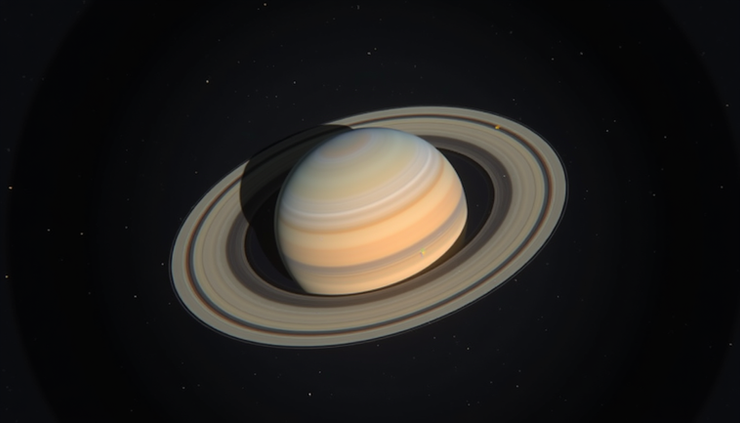
Saturn’s Rings at Their Best
Saturn reaches opposition on May 15, 2026, meaning it will be opposite the sun in the sky and visible all night. This is the best time to observe Saturn because it will be at its closest approach to Earth and fully illuminated.
Saturn’s rings will appear bright and wide open through a telescope.
The planet will be located in the constellation Pisces.
Look for Saturn rising in the east around sunset and setting in the west near sunrise.
Even a small telescope will reveal the iconic rings, and larger instruments can show details like the Cassini Division, a dark gap between the rings. Observing Saturn during opposition is a highlight for many stargazers.
Mercury’s Evening Appearance
Mercury, often difficult to spot because of its proximity to the sun, makes a brief but bright appearance in the evening sky in late May. Around the 25th, Mercury reaches its greatest eastern elongation, meaning it is farthest from the sun as seen from Earth.
Look low in the western sky just after sunset.
Mercury will shine with a magnitude bright enough to be seen with the naked eye.
This is a good chance to spot the elusive planet without a telescope.
Because Mercury sets quickly after the sun, find a clear horizon and scan the sky soon after sunset for a brief glimpse.
Tips for Enjoying the Night Sky in May
Check the weather forecast to find clear nights.
Use a star chart or astronomy app to identify constellations and planets.
Allow your eyes to adjust to darkness for at least 20 minutes.
Avoid using bright white lights; use red light if you need illumination.
Dress warmly and bring a comfortable chair or blanket for longer viewing sessions.
May 2026 offers a rich variety of celestial sights that can be enjoyed by anyone interested in the night sky. From bright planets and meteor showers to the stunning rings of Saturn, this month invites you to look up and explore the universe above.


Comments