


Top Celestial Events for Sky Watchers to Experience in June 2026
Bold Creations by TJ 6/10/202
June 2026 promises an exciting month for anyone who loves gazing at the night sky. From dazzling meteor showers to rare planetary alignments, the celestial events this month offer plenty of opportunities to witness the wonders of the universe. Whether you are a seasoned astronomer or a casual stargazer, these events will provide memorable moments under the stars.

The June Solstice and Its Impact on Night Sky Viewing
The month begins with the June solstice on June 21, marking the official start of summer in the Northern Hemisphere. This event is significant because it results in the longest day and shortest night of the year. For sky watchers, this means less darkness to observe stars, but it also offers a unique chance to see the sun’s highest path in the sky.
The solstice occurs at 04:39 UTC on June 21, 2026.
After the solstice, nights gradually lengthen, improving conditions for stargazing.
The solstice also affects the visibility of certain constellations, with some disappearing below the horizon for the season.
Understanding the solstice helps plan the best times for night sky observation during June.
The June Boötids Meteor Shower Peaks
One of the most anticipated events in June is the Boötids meteor shower. This shower is known for producing bright, slow-moving meteors that can be spectacular to watch.
Peak activity is expected around June 27-28, 2026.
The radiant point is in the constellation Boötes, near the bright star Arcturus.
Observers can expect up to 10 meteors per hour under ideal dark sky conditions.
The moon phase during the peak will be a waning crescent, which means minimal moonlight interference.
To catch the best view, find a dark location away from city lights and look toward the northeastern sky after midnight.
Rare Planetary Alignment in the Early Morning Sky
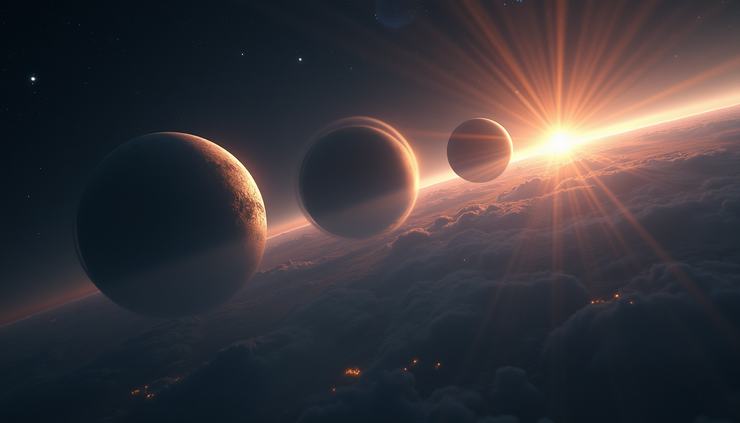
June 2026 features a rare alignment of three planets visible just before dawn. Venus, Mars, and Jupiter will appear close together in the eastern sky, creating a striking sight for early risers.
The alignment will be most noticeable from June 10 to June 15.
Venus will shine brightest, followed by Jupiter and Mars.
This event offers a great chance for photographers to capture the planets in a single frame.
Use binoculars or a small telescope for a closer look at planetary details.
This alignment is a reminder of the dynamic nature of our solar system and how planetary orbits occasionally line up from our perspective on Earth.
The Full Moon and Its June Names
The full moon in June 2026 will occur on June 24. This moon is often called the “Strawberry Moon” because it coincides with the strawberry harvesting season in North America.
The full moon will rise around sunset and be visible all night.
It offers excellent lighting for night photography and moonlit hikes.
The moon will be near the bright star Antares in the constellation Scorpius, creating a beautiful pairing.
Watching the full moon rise over a natural landscape can be a peaceful and inspiring experience for sky watchers.
Tips for Enjoying June’s Night Sky Events
To make the most of these celestial events, consider the following tips:
Check local weather forecasts for clear skies.
Use apps or star charts to identify constellations and planets.
Bring a reclining chair or blanket for comfortable viewing.
Avoid using bright white lights; use red light to preserve night vision.
Plan outings during the darkest hours, typically after midnight.
With these simple steps, anyone can enjoy the magic of June’s night sky.

Comments