


7 Traits of Highly Creative People and How to Cultivate Them
Bold Creations by TJ 10/2/2026
Creative people are not usually waiting around for lightning to strike. They notice more, question more, play more, and recover from failed attempts faster than most people expect.
Psychological research suggests that creative thinking is less like a rare gift and more like a pattern of habits, attitudes, and mental skills. Some people may start with a stronger pull toward art, invention, storytelling, design, science, or problem-solving. Still, the traits that support original thinking can be practiced.
Creativity often grows when the mind has room to explore, connect ideas, and test what feels unusual. The seven traits below show up again and again in highly creative people, across fields as different as music, engineering, writing, cooking, teaching, and entrepreneurship.

Why creative traits matter more than creative talent
Talent helps, but it does not explain the whole story.
Many creative achievements come from a mix of personality, environment, skill, persistence, and timing. A songwriter needs emotional range, but also discipline. A scientist needs curiosity, but also patience. A designer needs imagination, but also the ability to revise again and again.
That means creative growth is practical. It can be trained through daily choices:
What you pay attention to
How you respond to uncertainty
Whether you keep experimenting after failure
How often you expose yourself to new ideas
Whether you protect time for focused work and free play
Psychology often describes creativity as a blend of original thinking and useful application. A wild idea matters more when it can become a poem, prototype, recipe, lesson plan, melody, or new way of solving a problem.
The 7 traits highly creative people tend to share
1. They are deeply curious
Curiosity is one of the clearest traits of creative people. It pushes the mind beyond the obvious answer and asks, “What else could be true?”
Highly creative people often collect questions the way others collect objects. They wonder how things work, why people behave the way they do, what would happen if two unrelated ideas were combined, and why a familiar routine exists in the first place.
This matters because curiosity expands the raw material of thought. A novelist who listens closely to overheard conversations builds better characters. A chef who studies both street food and chemistry finds new textures. A software developer who asks how children solve puzzles may design a simpler interface.
Curiosity also keeps people from settling too quickly. The first answer is often the most conventional one. The third, fourth, or tenth answer may be where originality begins.
How to cultivate curiosity
Try keeping a question list for one week. Each day, write down five things you wonder about. Do not rush to answer them. Let the list grow.
You can also practice asking better questions:
What am I assuming here?
What would a beginner notice?
What would happen if this rule changed?
Who has solved a similar problem in a different field?
Curiosity becomes stronger when it has a place to go. Read outside your normal interests. Visit a museum section you usually skip. Watch how a craftsperson works. Ask someone how they learned a skill.
2. They are open to new experiences
One of the strongest personality links in creativity research is openness to experience. People high in openness tend to enjoy novelty, imagination, art, unusual ideas, and intellectual exploration.
This does not mean every creative person is loud, spontaneous, or constantly chasing adventure. Many are quiet and reflective. The shared trait is mental openness, a willingness to consider fresh inputs instead of rejecting them too quickly.
Openness helps because the brain creates by combining material it already has. The more varied the material, the richer the combinations. A filmmaker who studies painting may frame scenes differently. A teacher who reads about game design may create more engaging lessons. A gardener who explores architecture may rethink the layout of a backyard.
New experiences also interrupt automatic thinking. Routine is useful, but too much sameness can make the mind efficient in predictable ways. Novelty wakes up attention.
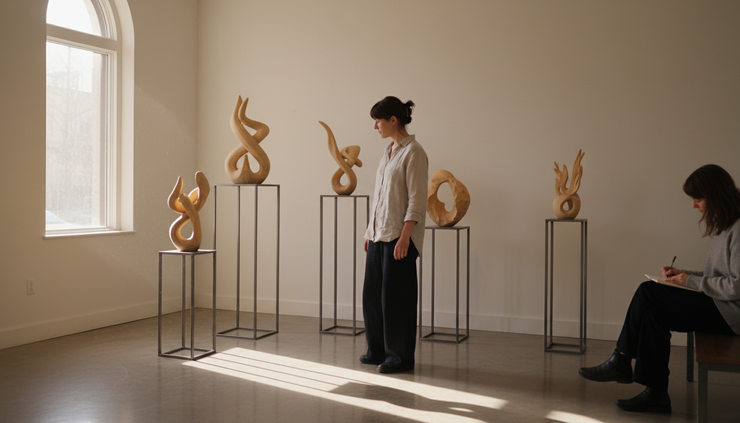
How to cultivate openness
Build small doses of novelty into normal life. You do not need to move to a new city or reinvent your schedule.
Try one of these:
Take a different walking route and photograph three details you usually miss.
Read an essay from a field you know almost nothing about.
Listen to an unfamiliar genre of music while doing a simple task.
Cook with one ingredient you have never used before.
Talk with someone whose work is different from yours.
The goal is not to like everything. The goal is to give your mind more textures, patterns, and perspectives to draw from later.
3. They tolerate ambiguity
Creative work often begins in confusion. The idea is blurry. The outcome is uncertain. The right next step is unclear.
Many people rush to close that discomfort. Highly creative people are often better at staying with it. They can hold multiple possibilities in mind without needing an instant answer.
This trait is sometimes called tolerance for ambiguity. It shows up when a painter lets a canvas remain unresolved, when a researcher follows strange data instead of forcing it into an old theory, or when a songwriter keeps a rough lyric because something about it feels alive.
Ambiguity is not the same as chaos. Creative people still make decisions. They simply allow a longer period of exploration before narrowing down.
That extra time can reveal options that would vanish under pressure. It also helps people avoid copying the most familiar solution just to feel certain.
How to cultivate tolerance for ambiguity
Practice pausing before deciding. When facing a creative problem, generate several possible paths before choosing one. Set a timer for 10 minutes and list imperfect ideas without judging them.
You can also use this sentence: “I do not need to solve this yet.” That simple permission can lower the pressure enough for better thinking.
Other helpful habits include:
Sketching rough versions before making a final piece
Writing messy first drafts
Keeping experiments that do not have an obvious use yet
Letting a problem rest overnight before editing or deciding
The mind often keeps working in the background when given time.
4. They connect ideas across boundaries
Creative thinkers are often skilled at seeing relationships that others miss. They connect one field to another, one memory to a current challenge, or one object’s function to a new use.
This is why metaphors matter so much in creative thinking. A good metaphor is a bridge. It lets the mind carry insight from one area into another.
For example, a dance instructor might explain balance by comparing the body to a tree with roots. A product designer might borrow from bird nests to think about lightweight structure. A parent might use improv games to make chores feel less tense.
Original ideas often come from combinations, not from pure invention. The pieces may already exist. The creative act lies in joining them in a fresh way.
How to cultivate connection-making
Create a “commonplace” notebook. Use it to collect quotes, sketches, overheard phrases, observations, questions, recipes, images, and odd facts. Review it once a week and look for links.
Try this exercise:
Choose a problem you want to solve.
Pick a random object nearby.
Ask how that object handles shape, movement, limits, storage, pressure, or attention.
Apply one of those features to your problem.
If the object is a zipper, you might think about bringing two separate parts together. If it is a sponge, you might think about absorbing, releasing, or filtering. Most attempts will feel strange. A few may open a new route.

5. They are intrinsically motivated
Highly creative people often care deeply about the work itself. They like solving the puzzle, shaping the sentence, hearing the chord change, testing the material, or understanding the pattern.
External rewards can matter. People need income, recognition, grades, clients, and opportunities. Yet research on motivation often finds that creative work benefits from intrinsic motivation, the drive to do something because it feels meaningful, interesting, or satisfying.
This inner pull helps people stay with difficult work. A person who only wants praise may quit when the first draft disappoints. A person who loves the process is more likely to revise.
Intrinsic motivation also makes exploration safer. If the only goal is approval, unusual ideas can feel too risky. If the goal includes discovery, a failed experiment still has value.
How to cultivate intrinsic motivation
Pay attention to energy. Which parts of a project make you lose track of time? Which topics do you return to even when no one asks you to? Which problems annoy you in a way that makes you want to fix them?
Then build more work around those signals.
A few practical steps help:
Set private goals before public ones.
Keep a project that does not need to earn money or impress anyone.
Track what you learned, not only what you finished.
Make time for playful practice without measuring the result.
A small personal project can protect the joy that fuels bigger work.
6. They are persistent through frustration
Creative people are often romanticized as effortless geniuses. Real creative work usually includes false starts, dull stretches, rejection, boredom, and revision.
Persistence matters because strong ideas rarely arrive fully formed. A cartoonist may draw dozens of versions before one lands. A scientist may run repeated tests before the pattern becomes clear. A musician may repeat a phrase until it finally carries the right feeling.
The key is not stubbornly clinging to every idea. It is staying committed to the process while remaining flexible about the form.
Creative persistence includes three skills:
Returning after disappointment
Learning from feedback without collapsing
Revising without losing the original spark
This trait also builds confidence. Each time someone survives an awkward draft or failed attempt, the next risk feels less threatening.
How to cultivate persistence
Separate your identity from the current version of the work. Instead of saying, “I am bad at this,” try, “This version is not working yet.”
Use a revision rule. For any creative project, commit to making three versions before judging the whole idea. The first version helps you begin. The second teaches you what is missing. The third often reveals whether the idea has real promise.
It also helps to make failure smaller. Run quick experiments. Make a sample before building the full piece. Share a rough version with one trusted person. Lower the cost of learning.
7. They make room for solitude and reflection
Creative people need input, but they also need time to digest it. Solitude gives the mind space to sort impressions, follow associations, and hear quieter ideas.
This does not mean creative people are all introverts. Many thrive through collaboration and conversation. Still, reflection plays a major role in turning experience into insight.
Quiet time helps the brain move from collecting to meaning-making. A walk without headphones, a few minutes of journaling, or a calm morning routine can bring forward ideas that were buried under noise.
Reflection also supports self-awareness. Creative people often learn their own rhythms. They notice when they do their best thinking, what environments help them focus, and when they need rest rather than more pressure.

How to cultivate reflection
Protect small pockets of quiet. Ten minutes can help if used consistently.
Try one of these habits:
Take a short walk without audio.
Keep a journal beside your bed.
End the day by writing one observation, one question, and one idea.
Sit with a problem before searching for advice.
Review unfinished thoughts once a week.
Solitude works best when it feels like attention, not punishment. Choose a form that suits your temperament.
How to build a more creative life
The traits above work together. Curiosity brings in questions. Openness brings in new material. Ambiguity keeps the mind from closing too soon. Connection-making turns raw material into ideas. Intrinsic motivation keeps the work meaningful. Persistence carries it through difficulty. Reflection gives it depth.
To make these traits part of daily life, start small. Pick one trait for the next two weeks. Choose a practice simple enough that you can repeat it.
For example:
Trait to practice | Simple daily action |
Curiosity | Write down three questions before answering a problem. |
Openness | Expose yourself to one unfamiliar idea, image, sound, or place. |
Ambiguity | Wait 10 minutes before choosing your first solution. |
Connection-making | Combine two unrelated notes from your week. |
Intrinsic motivation | Spend 15 minutes on a project just because it interests you. |
Persistence | Revise one small piece of work before judging it. |
Reflection | Take a quiet walk or write one page by hand. |
The point is not to become a different person overnight. It is to create conditions where original thought can show up more often.
Creative people are not free from doubt, distraction, or failure. They have learned how to keep engaging anyway. They ask better questions. They stay open longer. They notice patterns. They return to the work.
Choose one trait and practice it today. A more creative mind is built through repeated moments of attention, courage, play, and patience.



Comments